
How Many Porta Potties Do I Need for a Construction Site?
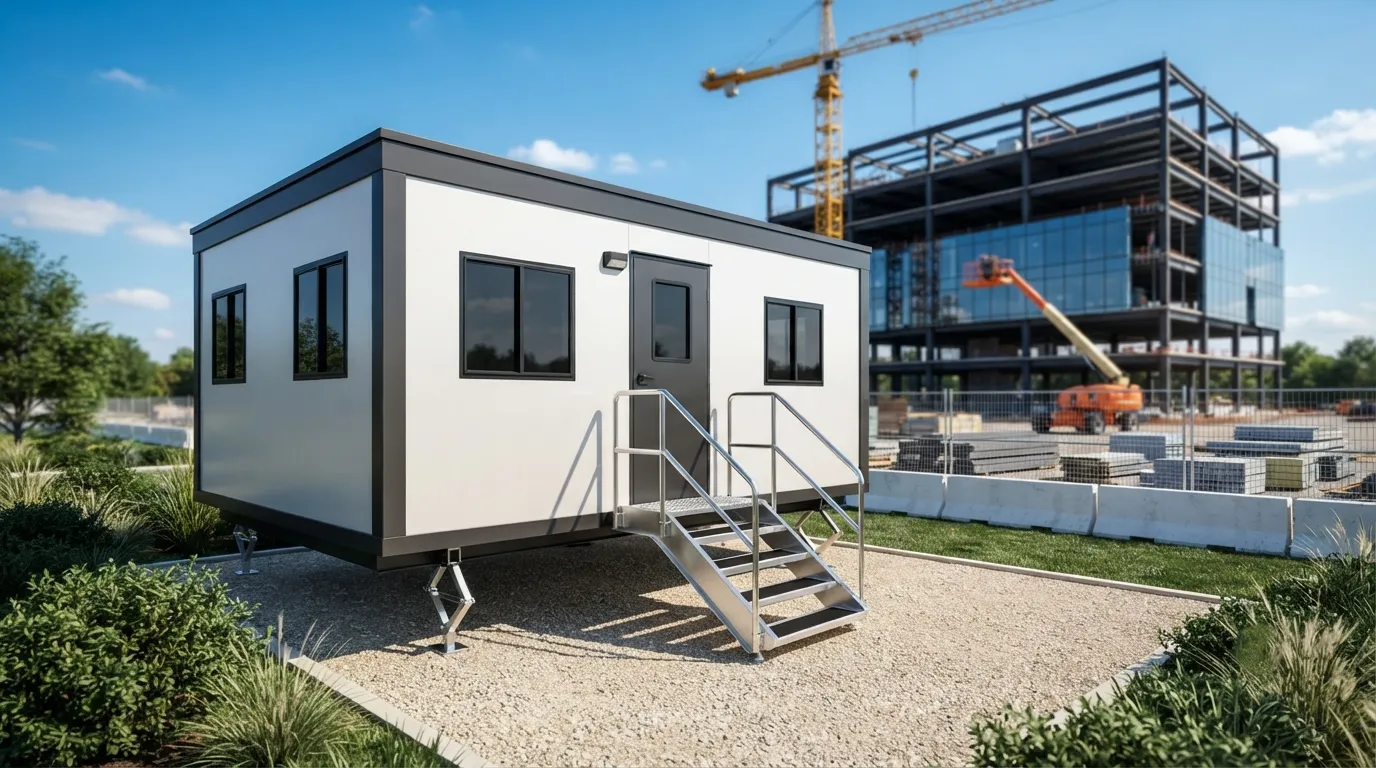
Start with OSHA 1926.51(c). Up to 20 workers, one toilet facility covers you. From 20 to 200 workers, add one toilet seat and one urinal per 40 workers. Past 200 workers, the ratio drops to one seat and one urinal per 50. Say you've got a 35-person framing crew on a job near Greenbriar, 3.4 miles northeast of Clearwater. That puts you in the 20-to-200 bracket, so you need two toilet facilities, not one. A standard porta potty rental covers this bracket cleanly, and most crews run one unit per trade zone so nobody walks across an active site to relieve themselves. If your crew works with paints, coatings, herbicides or insecticides, OSHA 1926.51(f)(1) also kicks in and requires washing facilities beyond the toilet count, separate from the general sanitation rule. Check OSHA portable toilet requirements before you finalize a quote, and use how many porta potties do i need style math for multi-week jobs where the crew size changes by phase.
How Many Porta Potties Do I Need for an Event?
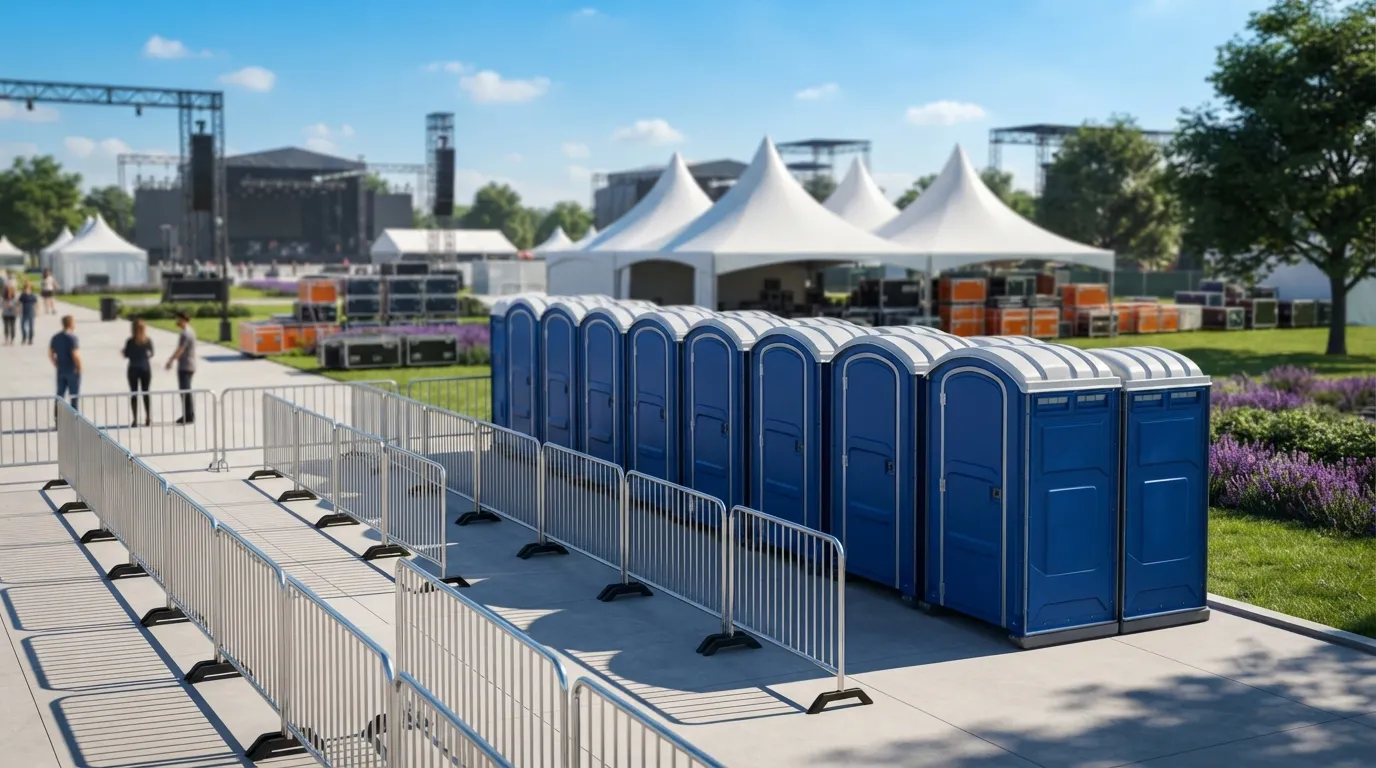
Events run on headcount and hours, not worker brackets. A common planning ratio is 1 unit per 50 guests for a 4-hour event; add a unit for every additional 2 hours beyond that, and add units if alcohol is served, since drink service roughly doubles bathroom trips per guest. Here's a working table for dry events:
| guests | 4 hours | 8 hours |
|---|---|---|
| 100 | 2 units | 3 units |
| 250 | 5 units | 7 units |
| 500 | 10 units | 13 units |
A wedding of 150 guests near Safety Harbor, 6.5 miles northeast of Clearwater, running 6 hours with a bar, should plan for 4 to 5 standard units instead of the 3 the dry-event math suggests. Multi-day festivals need service revisits built into the plan, not just more units sitting static. Check event restroom rental or, for a wedding specifically, wedding restroom rental for guidance tailored to guest flow.
What Is the OSHA Ratio for Toilets on a Jobsite?
OSHA 1926.51(c) sets three brackets: one facility for 20 workers or fewer, one toilet seat plus one urinal per 40 workers between 20 and 200, and one seat plus one urinal per 50 workers at 200 or more. This is a construction-specific rule; general industry workplaces fall under 1910.141(c)(1)(i) instead, which uses a different table entirely. Don't mix the two if you're staffing a warehouse crew alongside a jobsite crew on the same property. A 90-person crew building out a strip center near Dunedin, 7.4 miles northwest of Clearwater, lands in the 20-to-200 bracket and needs three units under the ratio. Add ADA accessible porta potty units per ADA Standards 213.2, which requires at least 5 percent of clustered single-user units to be accessible, never fewer than one. For crews handling coatings or pesticides specifically, 1926.51(f)(1) washing facilities are a separate requirement layered on top of the toilet count. Full breakdown at OSHA portable toilet requirements.
How Many Tons Does a 20 Yard Dumpster Hold?
A 20 yard dumpster typically holds somewhere around 2 to 3 tons depending on material density, and runs about 22 feet long on most chassis configurations used for residential and light commercial jobs. That volume works out to roughly 20 cubic yards, which is about 540 cubic feet of capacity. Compare that to a 10 yard dumpster, which runs about 12 feet long and holds roughly 135 cubic feet less by volume, closer to 10 cubic yards or 270 cubic feet. For a kitchen remodel or a small demo near Oldsmar, 9.7 miles northeast of Clearwater, the 10 yard is often plenty; a full home gut usually pushes into 20 yard territory. See dumpster sizes and dimensions for the complete size breakdown and 10 yard dumpster rental or 20 yard dumpster rental for unit-specific detail.
How Many Tons Does a 30 Yard or 40 Yard Dumpster Hold?
A 30 yard dumpster generally holds 3 to 4 tons of mixed debris, with a volume around 30 cubic yards. A 40 yard dumpster pushes that to roughly 4 to 5 tons and about 40 cubic yards, which converts to somewhere near 1,080 cubic feet. Both sizes need real clearance to deliver: plan for about 60 feet of straight room behind the truck so the roll-off can be set down and pulled without clipping a fence or a parked car. That clearance matters more in tighter Clearwater lots than it does on open commercial sites. If you're gutting a multi-unit building or clearing a construction site with heavy debris like concrete or shingles, the weight adds up faster than the volume does, so check dumpster weight limits before you load it. Full specs live at 30 yard dumpster rental and 40 yard dumpster rental, and what cannot go in a dumpster covers the materials that will get a load rejected at the dump.
Do I Need More Units for a Multi-Day Event?
Yes. A single service visit per week covers roughly 10 users over a 40-hour stretch under ANSI/PSAI Z4.3, the baseline portable sanitation service standard. A multi-day festival or fair blows past that fast. If your event runs Friday through Sunday with a few thousand attendees passing through daily, you need either more units up front or a mid-event service call scheduled in, not both skipped. A county fair near Pinellas Park, 12.1 miles southeast of Clearwater, running three days with a beer garden, should plan for daily servicing on top of the base unit count, since alcohol service pushes usage well past the dry-event math. Deluxe flushable units hold up better over multi-day runs since they don't rely purely on chemical breakdown between services; see deluxe flushable porta potty for that option, or festival restroom rental and county fair restrooms for event-specific planning.
Should I Rent a Restroom Trailer Instead of Standard Units?
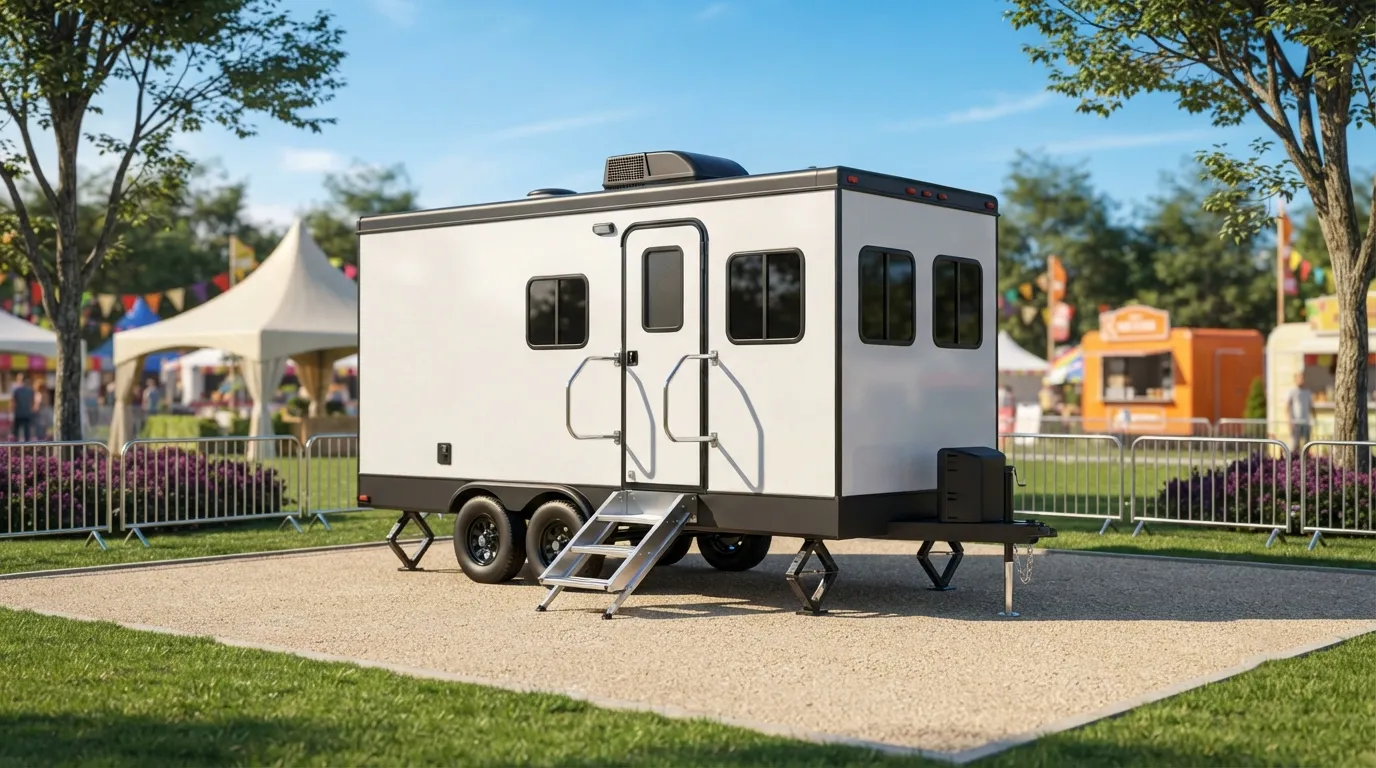
Once your headcount passes a few hundred guests or your event calls for a nicer finish, a restroom trailer usually makes more sense than a bank of standalone units. A 2-stall trailer suits smaller gatherings; an 8-stall handles a wedding or corporate event comfortably without a line forming at the door. Trailers also solve the ADA question differently: instead of a separate accessible unit under ADA Standards 213.2, many trailers build in a compliant stall with the required 36 inch clear route per ADA Standards 403.5.1 and a 32 inch door opening per ADA Standards 404.2.3. For a golf tournament or a film shoot in Clearwater, the trailer route also keeps units looking presentable in photos. Compare options at restroom trailer rental, 4 stall restroom trailer, 8 stall restroom trailer, or check restroom trailer rental cost against a standard unit budget at porta potty rental cost.
How many porta potties do I need for 100 people?
For a 4-hour dry event, plan on 2 standard units for 100 guests. Add a third if the event runs past 6 hours or alcohol is served, since drinking roughly doubles restroom trips per guest over the course of the day.
How many porta potties do I need for a construction crew of 50?
Under OSHA 1926.51(c), a 50-person crew falls in the 20-to-200 bracket, requiring one toilet seat and one urinal per 40 workers. That means two full facilities minimum, sized up as the crew grows toward 80.
How many cubic feet are in a 10 yard dumpster?
A 10 yard dumpster holds roughly 270 cubic feet, translating to about 10 cubic yards of material. It typically runs around 12 feet long, making it a fit for single-room remodels or small yard cleanups.
How many feet is a 20 yard dumpster?
Most 20 yard dumpsters run about 22 feet long, though width and height vary by hauler. Full measurements, including height and swing clearance, are on dumpster sizes and dimensions.
Do I need an ADA unit even for a small event?
Yes, if you're clustering multiple single-user units. ADA Standards 213.2 requires at least 5 percent of clustered portable toilets to be accessible, with a minimum of one unit regardless of total count.
How many tons can a 30 yard dumpster hold before I get charged extra?
Typically 3 to 4 tons is the working range for a 30 yard container, though limits vary by hauler and material type. Check dumpster weight limits before loading heavy debris like concrete, roofing or tile.
Next step
Get a delivery date
Tell us the address, the dates and the headcount. We size the order and confirm the route.