
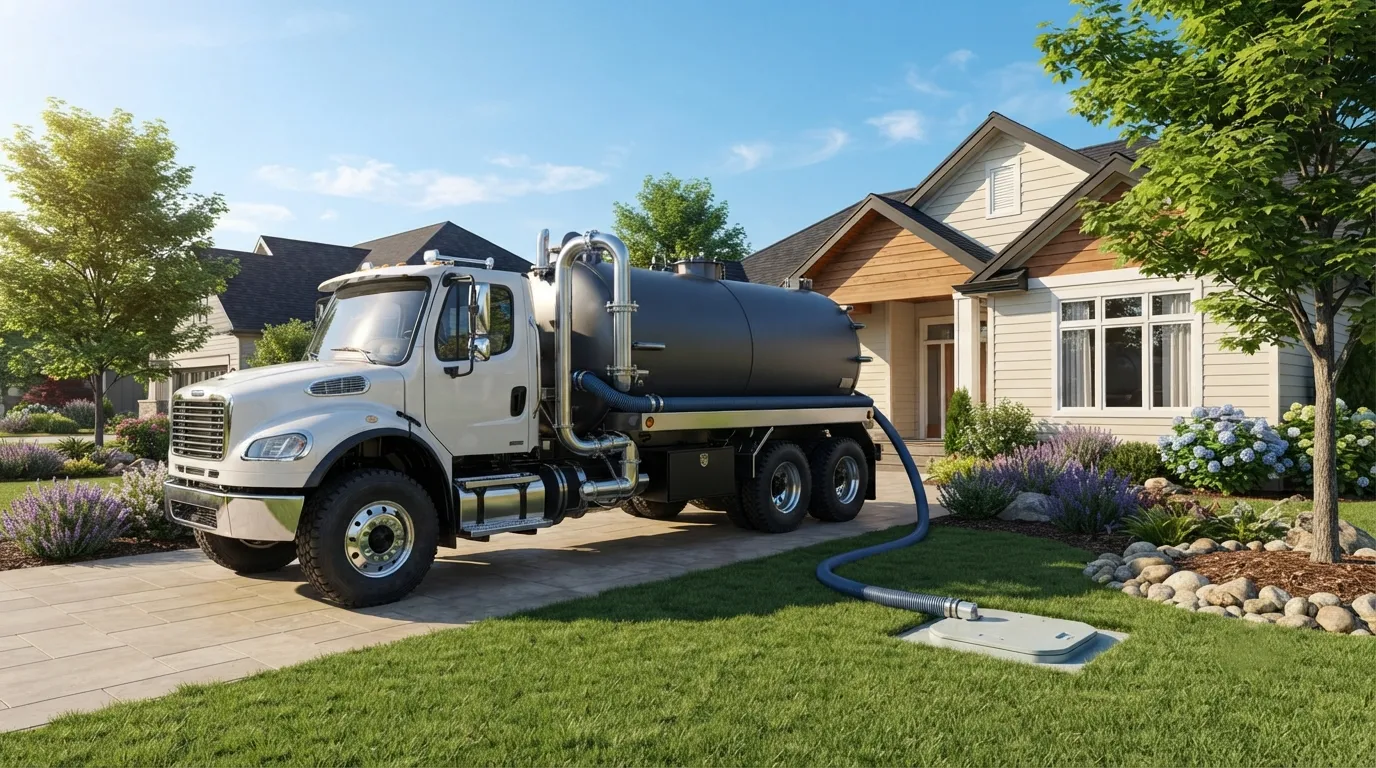
How often does a septic tank need pumping?
The 3 to 5 year window is the baseline, but your actual schedule depends on tank size and how many people live in the house. A bigger household fills a tank faster. A smaller tank empties sooner even with fewer people using it. If you have never had the tank serviced and do not know its size, that is the first thing to find out before guessing at an interval. We cover the full breakdown on how often to pump a septic tank, including what changes the math for larger families or older systems. Garbage disposals push more solids into the tank, which shortens the interval too. If you are renting a property short-term and want a stopgap instead of a permanent fix, a holding tank rental buys time until the system gets sorted. For job sites in Clearwater with no sewer hookup at all, that same holding tank option often makes more sense than trying to time septic service around a construction schedule outlined in our construction site services page.
What are the warning signs a septic tank needs pumping?
Slow drains, gurgling pipes and standing water near the drain field are the usual early signs. Sewage odor near the tank lid or a suspiciously green, soggy patch of lawn over the leach field means the tank is likely already full or close to it. We go deeper into each symptom on our septic tank warning signs page. Waiting past these signs risks a backup into the house, which costs a lot more to fix than a pump-out. If multiple fixtures back up at once, that is not a clog, that is a full tank. Homeowners in Clearwater and out toward Safety Harbor, 6.5 miles northeast, deal with similar soil conditions, so the same signs apply across that stretch. Ignoring a slow drain for months is the most common way a routine pump-out turns into an emergency call, and at that point you are looking at emergency septic service instead of a scheduled visit.

What does a septic pumping service include?
A standard visit includes locating and opening the tank, pumping out solids and liquid, and a basic check of the tank condition. Most crews will also flag visible cracks, root intrusion or a failing baffle while they are down there, since that is the best time to catch a bigger problem early. Some visits include a rinse of the tank interior, depending on how much solid buildup has hardened on the walls. If your property has a grease interceptor instead of a standard septic tank, that is a different service with its own timing. A grease interceptor gets pumped once fats, oils, grease and solids reach 25 percent of the liquid depth, and we cover that separately on our grease trap pumping page. Restaurants and commercial kitchens in Clearwater should treat that 25 percent mark as the trigger point rather than pumping on a fixed calendar. For general questions about scheduling and what a pump-out costs before you commit, our septic tank cleaning page walks through the process step by step.

How much does septic tank pumping cost?
Pricing depends mainly on tank size and how far the truck has to travel to reach the property. Here is the general range for septic pumping visits:
| service | duration | low | typical | high |
|---|---|---|---|---|
| septic pumping | day | $150 | $250 | $300 |
| septic pumping | weekend | $50 | $100 | $150 |
A standard day rate covers most single-family residential tanks. Weekend pricing runs lower for smaller add-on visits, but a full pump-out on a weekend can still land at the higher end depending on access and tank condition. For a detailed cost breakdown by tank size and a look at what drives the price up or down, see our septic tank pumping cost page. If you are comparing this against other site sanitation costs for a project budget, our porta potty rental cost and dumpster rental cost pages break down those numbers too, since a lot of construction budgets need all three in the same estimate.
What is a holding tank and when do I need one?
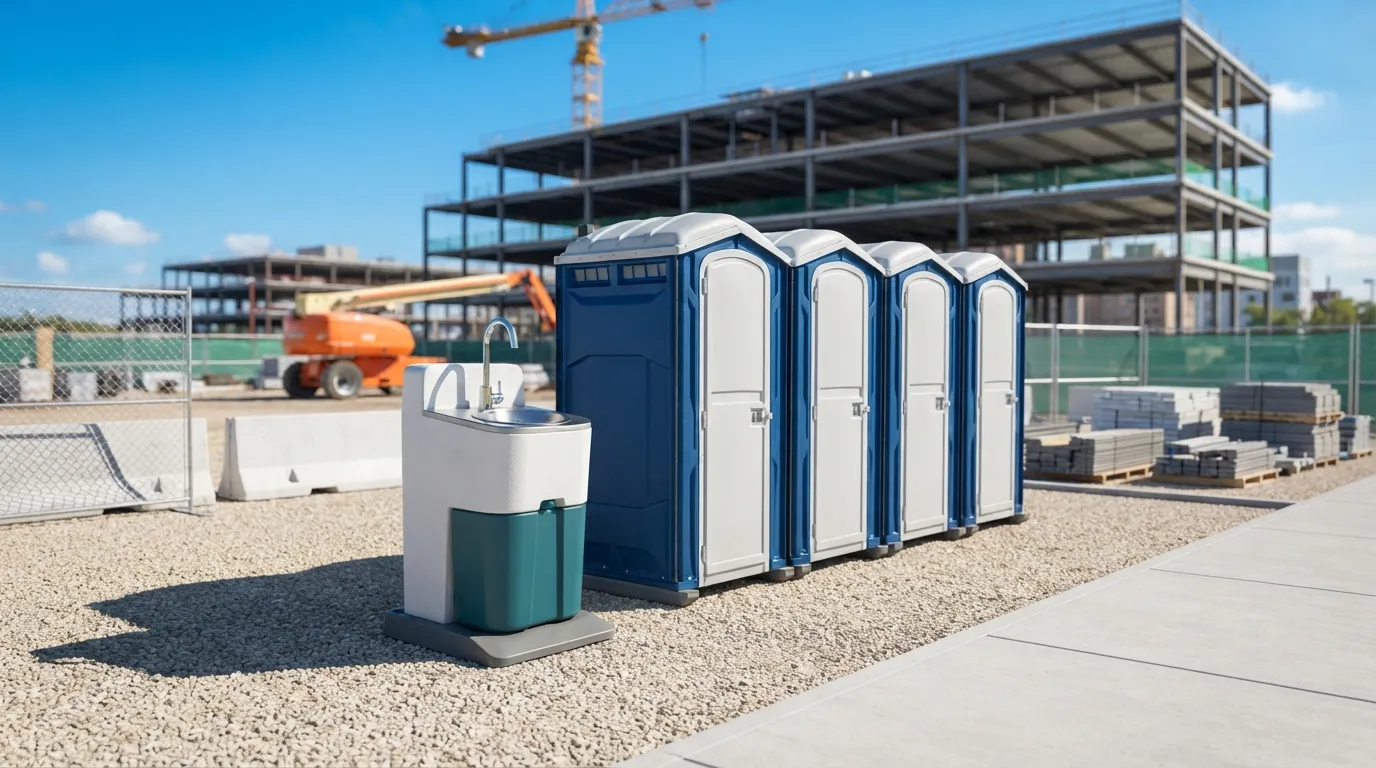
A holding tank is a sealed container that stores wastewater with no drain field or leach system attached to it. It gets pumped out on a schedule instead of processing waste on-site like a septic system does. This works for construction sites without sewer access, temporary events, or properties waiting on a septic repair. We rent these through our holding tank rental page, and they pair well with portable toilet rental setups on job sites that need both a break area and a wastewater solution. For agricultural properties, OSHA 1928.110 requires potable water, toilets and handwashing for hand-labor employees, at one facility per 20 workers, within a quarter mile walk, which is worth knowing if you are staffing a farm site covered on our farm and agricultural restrooms page. Disaster response crews use the same holding tank setup, detailed further on disaster relief sanitation.
Do you offer emergency septic pumping in Clearwater?
Yes. A backed-up tank does not wait for a convenient appointment, so we run emergency response for active backups and overflows. Emergency visits carry weekend and after-hours pricing shown in the table above, and dispatch time depends on how far the crew has to travel. Clearwater properties near Greenbriar, just 3.4 miles northeast, or out toward Dunedin at 7.4 miles northwest, both fall within a normal same-day response window. For full details on what counts as an emergency and how fast we can get there, visit our emergency septic service page. If the backup is tied to a construction site rather than a home, pair that call with a temporary power pole or light tower rental if the crew is working after dark to fix it. Homes further out near Oldsmar, 9.7 miles northeast, or Pinellas Park at 12.1 miles southeast, are still within our normal service radius.
Clearwater's older neighborhoods often run septic systems installed decades ago, so tank capacity varies a lot more than in newer developments. If you are not sure what size tank your property has, that is the first question we ask before quoting a job. For general sanitation planning on a bigger property, whether that is a rental home or a construction lot, check our main septic pumping service overview or start from the Porta Potty Rental in Clearwater, FL homepage for the full list of what we run in the city.
How much does septic tank pumping cost on average?
Most residential pump-outs fall in the $150 to $300 day-rate range, depending on tank size and access. Weekend and emergency visits run differently, closer to $50 to $150 for smaller add-on work. See our septic tank pumping cost page for a full size-based breakdown.
How often should a 1,000 gallon septic tank be pumped?
A 1,000 gallon tank is typically pumped every 3 to 5 years, based on household size and usage. Larger households or heavy garbage disposal use shorten that window. Check our how often to pump a septic tank page for specifics.
What happens if I wait too long to pump my septic tank?
Waiting past the warning signs risks a full backup into the house, which costs far more than a scheduled pump-out. Slow drains and gurgling pipes are early signals. See septic tank warning signs for the full list before it becomes an emergency call.
Can I get same-day septic pumping in Clearwater?
Yes, for active emergencies we run same-day response depending on location and crew availability. Properties closer to central Clearwater typically get faster turnaround than those farther out. Visit emergency septic service for details on dispatch timing.
Do you service grease traps or just residential septic tanks?
We handle both. Grease interceptors get pumped once fats, oils, grease and solids reach 25 percent of the liquid depth, which is a different trigger than the calendar-based residential schedule. See grease trap pumping for commercial kitchen scheduling.
What is the difference between septic pumping and a holding tank rental?
Septic pumping empties an existing in-ground tank connected to a drain field. A holding tank rental is a standalone sealed unit for sites with no septic system at all, like construction lots or events. Compare both on our holding tank rental page.
Next step
Get a delivery date
Tell us the address, the dates and the headcount. We size the order and confirm the route.