
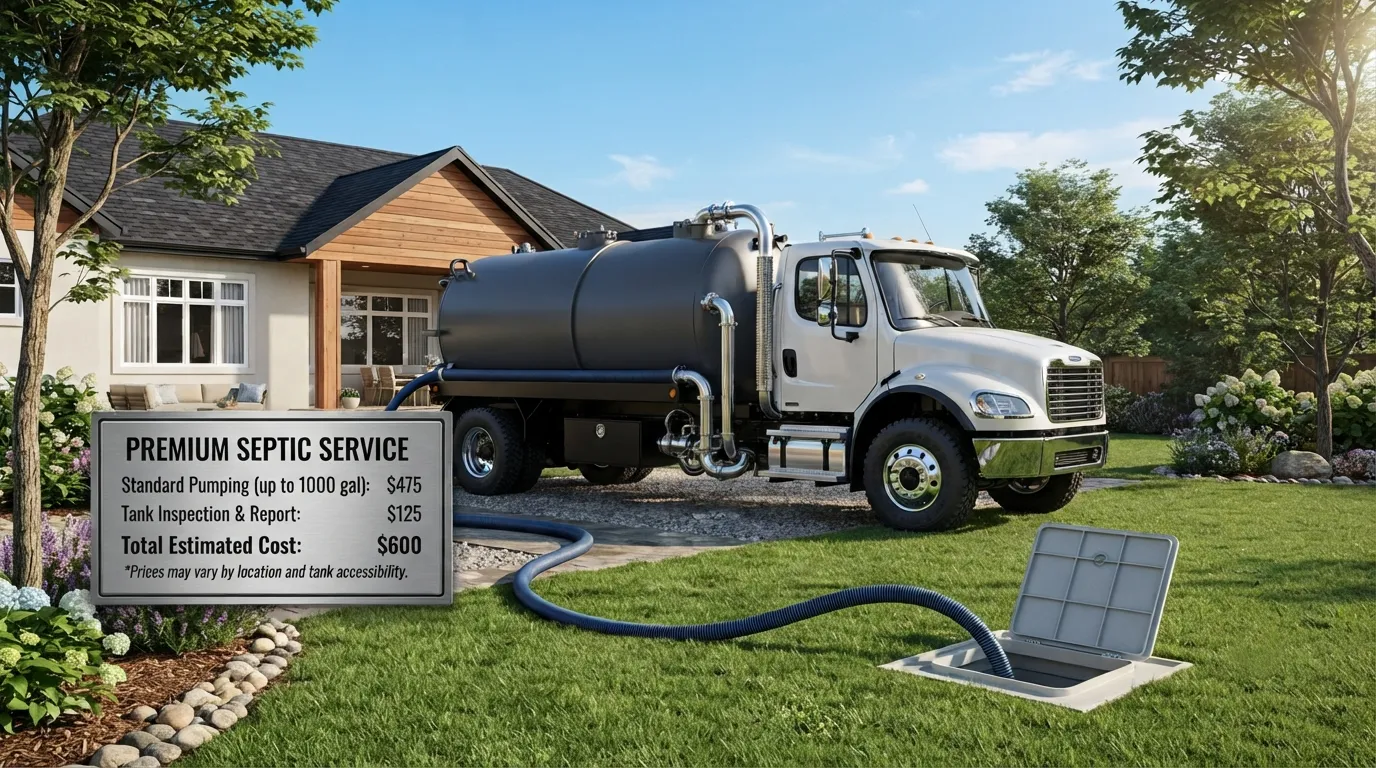
How Much Does Septic Tank Pumping Cost?
Most homeowners in Clearwater pay somewhere between $150 and $300 for a single pump-out visit, and that band covers the bulk of residential jobs we see. Where you land inside it depends on tank access, how much solid buildup has settled, and whether the crew has to break out a hose extension to reach a tank set back from the driveway. A tank that has gone past its normal service window costs more to clear because the solids layer is thicker and takes longer to break up. Clearwater Porta Pros prices every job after a look at the tank, not off a phone quote alone, because two 1,000 gallon tanks can need very different amounts of work. If you are budgeting ahead of a home sale or a renovation, our septic tank pumping cost guide breaks the range down further, and the septic pumping service page covers what a standard visit includes.
| service | duration | low | typical | high |
|---|---|---|---|---|
| septic pump-out | day | $150 | $225 | $300 |
| septic pump-out | weekend | $50 | $100 | $150 |
What Drives Septic Tank Cleaning Prices Up or Down?
Tank size is the biggest lever. A 1,000 gallon tank pumped on schedule costs less than a 1,500 gallon tank that is overdue and full of solids. Household size matters too, since a residential septic tank is typically pumped every 3 to 5 years, and that interval shifts with how many people are running water through the system daily. Skipping a cycle or two lets the sludge layer build up, which slows the job down and can push the price toward the higher end of the band. Access counts for a lot as well. A tank buried under a deck or behind a fence takes more labor to reach than one with a clear lid at grade. Homeowners comparing options sometimes also weigh a holding tank rental for temporary use during repairs, or check septic tank warning signs before deciding whether a pump-out or a repair is what they actually need. If the tank services a restaurant or commercial kitchen instead of a house, that is a different job entirely, closer to what we cover under grease trap pumping, since a grease interceptor is pumped once fats, oils, grease and solids reach 25 percent of the liquid depth.

How Often Should a Septic Tank Be Pumped?
Every 3 to 5 years is the standard interval for a typical residential tank, and that range comes from tank size measured against household size, not a fixed calendar date. A larger household putting more water and waste through the system will need to pump sooner than a smaller one with the same size tank. Waiting too long past that window is what pushes a routine job into a more expensive one, because solids that should have been removed years earlier compact and take longer to break loose. Our how often to pump a septic tank page walks through how to estimate your own interval based on tank size and usage. Clearwater homes on well-established septic systems, especially older properties, benefit from tracking pump dates rather than guessing. If you notice slow drains or standing water near the tank lid before your next scheduled service, that is worth checking against our septic tank warning signs list rather than waiting out the calendar.

Is Septic Pumping Different from Portable Toilet Service?
Yes, they solve different problems even though the same company often handles both. Septic pumping clears an underground tank tied to a house or building's plumbing. Portable sanitation, by contrast, is a self-contained unit brought to a site with no plumbing connection at all, which is why construction crews and event organizers in Clearwater lean on porta potty rental instead of septic service. A construction site follows OSHA 1926.51(c) for toilet counts based on crew size, while a homeowner's septic tank follows a pumping schedule based on tank size and household use. If you are running a renovation project that needs both a working bathroom on site and eventual septic maintenance once the addition is plumbed in, look at home renovation porta potty service for the interim and keep septic pumping on its normal cycle. Event organizers researching restroom needs for a wedding or festival should start at event restroom rental rather than this page, since tank pumping and event sanitation are priced and scheduled completely differently.
What Should I Ask Before Booking a Pump-Out?
Ask about tank size, last pump date if known, and access to the lid, since all three affect price and how long the truck needs on site. A crew traveling further also factors into scheduling. Greenbriar sits 3.4 miles northeast of central Clearwater, Safety Harbor is 6.5 miles northeast, and Dunedin is 7.4 miles northwest, so travel time within these distances is usually built into a standard service window rather than treated as an extra trip charge. Ask whether the price quoted covers disposal or just the pump-out itself, since some companies split those out. If your property has never been pumped or you inherited a house with no service records, say so up front, because the crew may need extra time to locate the tank and lid before work starts. Homeowners who want a fuller breakdown of what a visit includes, from setup to cleanup, should read septic tank cleaning before the truck arrives. For emergencies, like a backup on a weekend, emergency septic service covers faster response outside normal scheduling.
Why does tank size change the price so much?
A bigger tank holds more sludge and liquid, which takes longer to pump and haul, and that added time is the main cost driver. A 1,000 gallon tank generally costs less to service than a 1,500 gallon tank in similar condition, simply because there is more material to remove.
How do I know if my tank needs pumping now?
Slow drains, gurgling pipes and soggy ground near the tank lid are the clearest signs. These often show up before a scheduled pump date, and waiting can turn a routine visit into a bigger job. Check septic tank warning signs for the full list.
Does Clearwater Porta Pros handle commercial grease traps too?
Yes, grease interceptors are a separate service from residential septic tanks. They get pumped once fats, oils, grease and solids reach 25 percent of the liquid depth, which is a different schedule than a home septic tank. See grease trap pumping for details.
Can I rent a holding tank instead of pumping right away?
Sometimes, especially during a septic repair when the system is offline. A holding tank rental gives you working plumbing while the permanent fix is scheduled, though it is not a substitute for eventual pumping once the tank is back in service.
What if my septic tank backs up on a weekend?
Call for emergency service rather than waiting until Monday. A backup left untreated over a weekend gets worse, and emergency septic service covers exactly this kind of after-hours call in Clearwater.
Next step
Get a delivery date
Tell us the address, the dates and the headcount. We size the order and confirm the route.